Pages

Monday, October 8, 2012

UK: Girls who love physics

From the Guardian:  Girls who love physics

A report from the Institute of Physics this week revealed that nearly half of schools didn't send a single girl on to A level physics last year. Two girls shortlisted for this year's L'Oreal Young Scientist of the Year competition explain why they've bucked the trend and chosen physics

Alexandra Carroll, St Paul's Girls School
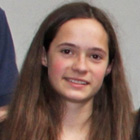
Alexandra Carroll Photograph: Ri When it came to picking my A levels, the decision was easy: physics, biology, chemistry and maths. For me, the sciences – in particular physics – are fundamental to understanding how everything around us functions.
So it came as a surprise to me that most girls in my school who are interested in science opted for two rather than three of the sciences, almost always dropping physics – a trend repeated across the whole of the UK. Physics seems to be an unpopular science, possibly as it is often considered the most difficult and tedious. Concepts of physics such as the mechanism behind electric motors are often taken for granted.
However, a few weeks ago I was afforded the opportunity to look beyond the syllabus to the true intricacy of physics. This opportunity came in the form of the L'Oreal Young Scientist of the Year competition for which the essay to enter this year was entitled "a timeline of electricity".
I was eager to enter, but in hindsight I realise I had no real idea of the enterprise I was undertaking. My timeline grew into a six-page essay as I retraced the path of electromagnetism from the creation of very first motor by Michael Faraday, to further back to a time when the discovery that lightning was actually made of electricity came as a shock (no pun intended).
The landscape of physics changed with each new discovery, such as realising that Thomas Edison did not invent the first electric bulb but an improved carbon filament that allowed the light to burn for longer.
I was delighted to be chosen as one of the final 16 to take part in a workshop at the Royal Institution on Tuesday. Even more excitingly, I discovered that we would get a unique chance to see Faraday's first motor up close – a landmark in the history of electricity. It was incredible to see the motor and its complexities in person and we also got to see his notebooks firsthand. I was looking at objects that changed industry completely.
Doing science at A level has expanded my interest in physics, with intricate concepts becoming obvious and the realisation that even the most complicated equations originate from the same basic principles, and finally the links between all three are becoming clear. But my favourite thing about physics and all sciences is that there is always more to discover. Science is infinite.

Fola Afolabi, Sydenham School
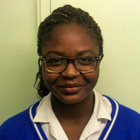
Fola Afolabi Photograph: Ri Faraday is one of the most influential scientists in history and I am still overwhelmed to have been given a once-in-a-lifetime opportunity to see his electric motor in action, especially since I'm fascinated by electromagnetism.
I believe that physics is a vital subject and from it you can develop transferable skills such as: observation, problem solving and analytical thinking. It also gives us a profound understanding into the world we live in.
I believe having it as a qualification is a real asset, especially within our modern society, which is why I found it disappointing that in 2011 physics was the fourth most popular subject in A-levels for boys in England, but the 19th most popular among girls. In the 21st century we are being empowered as young women: removing the bonds of stereotypes and breaking through the glass ceiling. Irrespective of one's gender, I believe it's important to grasp the fundamental ideas that are taught through physics.
Girls who don't study physics are missing out, without a doubt. Physics is highly regarded by employers and people who have this qualification tend to be better paid.
As a young person, before studying physics I didn't have high expectations of the subject as I had some connotations that it was hard, boring, or a "boy" subject. However after the first lesson, where we learned about heat radiation, I was heartstruck! This was taught through an experiment - by my teacher Dr Simon Faulkner - called Leslie's cube that shows how the matt black side of a box filled with hot water emits the most heat.
Physics is a natural science: it has made profound contributions to the advancement of new technologies and our understanding of the world. This is clearly seen with the recent discovery of the Higgs boson, incredible scientific milestone that will be vital for unravelling the mysteries of the universe.


Thursday, October 4, 2012

Women researchers as prolific as men in publishing papers

From LiveMint:  Women researchers as prolific as men in publishing papers

New Delhi: Women researchers in India are as prolific in publishing scientific papers as men in spite of being significantly fewer in number, says a study in Tuesday’s edition of Current Science.
While it’s established that many women drop out at progressive stages of their careers as scientists, the study in the peer-reviewed journal quantitatively establishes that—as a proportion of their representation in India’s population of scientists—women may not only be at par but better than their male counterparts.
For the study, the authors analysed—by gender—998 scientific papers published between 2004 and 2009 by researchers at the doctorate and post-doctorate levels. Generally, aspirant scientists are of ages 25-35 years at these stages of their careers. The study found that proportionally, there was barely any difference in the number of papers published by 358 women and 640 male researchers.
The study analysts found 26% of female research scholars published their findings in both science-citation index (SCI) and non-SCI journals; 11% in non-SCI and 63% in SCI journals. Almost similarly, 28% of male research scholars published both in SCI and non-SCI journals, 9% in non-SCI and 63% in SCI journals. SCI journals are those accessed by a database called the Science Citation Index, a compendium of more than 3,700 journals and a metric of their quality and outreach.
Other data show women are grossly under-represented as research scholars as well as in the larger scientific establishment. According to the department of science and technology, only about 37% of those with a PhD in science in India in 2005 were women; in general, only around 15% of India’s scientists were women, significantly lower than the 25% in the US and the European Union.
“This study is specific to women at the PhD and post-doctorate level and what’s most striking is there’s no difference in quality in their output,” said Rajesh Luthra, the main author of the study and head of the human resources department of the Council of Scientific and Industrial Research, India’s largest group of publicly funded research laboratories.
The data accentuated the fact that it was harder for women to have equally productive careers in science as men, he said. “The recently constituted task force for women in science talks about this,” he said.
In 2005, India’s science ministry constituted a committee to address the poor representation of women in science. Under-representation of women in science had grabbed international headlines after the then Harvard president and former US secretary of treasury Lawrence Summers attributed “differences in aptitude” as one reason for the lower representation of women in the upper echelons of science and engineering.
“There is a drastic drop in the percentage of women from the doctoral level to the scientist/faculty position, suggesting a bottleneck at the employment stage due to recruitment procedures and family responsibilities,” the committee said in its report, made public last year. “Focused efforts are needed to identify the sources of this precipitous drop and counteract them,” it said.
Garima Balwani, who’s pursuing a PhD in pharmacy at the Birla Institute of Technology and Science in Pilani, says she has never experienced any bias academically. “There are no separate restrictions for women studying science. Even to get papers published, there are no restrictions. Journals only consider your credibility,” she said.
Private companies, however, discriminated against women, she said. During her internship at a company she did not want to name, Balwani could not get hands-on training or do any actual research. “That particular company hired women only in selective departments like patent and regulatory affairs. They did not hire women in the department which involves actual research work,” she said.
Balwani added that several women who got a PhD also preferred to get into teaching, a point also emphasized by the science ministry committee.


Wednesday, October 3, 2012

Looking at Dignifying Science

From Sequential Tart News: Looking at Dignifying Science

s a girl, I was never once concerned that my career options were limited because of my gender. I grew up convinced I could be anything, and I had the support of my parents and teachers all the way. It was really only the stories of the obstacles women faced, and in some cases are still facing, that told me about the struggles of women to pursue their passions. Reading Dignifying Science was special for me, because I'm fascinated by these brilliant women who challenged scientific and cultural attitudes. Today I'm a microbiologist and writer, and it's because of female pioneers in these fields that I can contribute to how we understand and interpret the world around us. In comic form, learning about the accomplishments of these amazing women is informative and, let's be honest, fun.


Dignifying Science is written by Jim Ottaviani and illustrated by Donna Barr, Stephanie Gladden, Roberta Gregory, Lea Hernandez, Carla Speed McNeil, Linda Medley, Marie Severin, Jen Sorenson and Anne Timmons, with covers by Ramona Fradon and Mary Fleener.

The story I was least familiar with was the spectacular life of Hedy Lamarr. She escaped her oppressive husband and the Nazis to become an American film star and inventor. Lamarr patented a communications technology that eventually became useful for cellular phones. It's a fascinating story about a beautiful woman who lived in a time when men dominated the engineering arena. My sister is an electrical engineer today, and she designs wireless tech that is probably influenced by the designs that Lamarr created. Wow!

My favourite scientist has always been Marie Curie (1867-1934), and although Dignifying Science only touches on her story, it highlights the difficulties women, and men, experienced as scientists at the turn of the century. It is a tough thing to be on the frontier of a field, and many scientists, curious and brilliant people, lived with little and studied with less. Curie was the first woman to win a Nobel Prize, and she coined the term radioactivity. I've also studied Rosalind Franklin's work that helped to elucidate the true structure of DNA. She was a remarkable woman as well, and died before her colleagues were awarded their Nobel. Her story in Dignifying Science has an interesting blend of perspectives through the different art styles and does a good job with the complicated science and personality of Franklin.

Dignifying Science also includes stories about Lise Meitner, Barbara McClintock and Biruté Galdikas. The book is entertainingly written and illustrated, and makes a point to remind us that these stories are told for dramatic effect. There are many references provided to point readers towards other works about these important women. It’s also wonderful that Dignifying Science does not present these stories as historical curiosities, as though female scientists of this calibre are rare. Instead, I feel like the book does an excellent job of capturing a few tales about brilliant women in a historical context and reminds me to follow the discoveries that women are making every day. Ottaviani's collection of stories honors these great scientists and is a compelling and fun read. 

Monday, October 1, 2012

Turn up the girl power in science

From CosmicLog:  Turn up the girl power in science

It's not exactly surprising that males are perceived as more competent in science than females — but researchers at Yale University were surprised to find that even professional scientists showed evidence of such bias. Now the big question is what to do about it.
"Whenever I give a talk that mentions past findings of implicit gender bias in hiring, inevitably a scientist will say that can’t happen in our labs because we are trained to be objective," microbiologist Jo Handelsman, lead author of a study published in the Proceedings of the National Academy of Sciences, said in a Yale news release. "I had hoped that they were right."

Nope.

Handelsman and her colleagues asked 127 science faculty members from six institutions to review an application from a senior undergraduate student looking for a job as a lab manager. The faculty members were asked to judge how competent the applicant was, how much the student should be paid, and whether they'd be willing to mentor the student.

Each researcher looked at the same application — but in some cases the applicant was given a male name (John), and in the other cases a female name was assigned (Jennifer), all on a random basis. When the results were analyzed, it turned out that the sight-unseen male applicant was rated more competent than the female. The mean starting salary offer was $30,238.10 for John as opposed to $26,507.94 for Jennifer. Faculty members were more willing to mentor John than Jennifer.

The data showed a disparity whether the demographic category in question was male or female, young or old, tenured or untenured. "The bias appears pervasive among faculty and is not limited to a certain demographic subgroup," Handelsman and her colleagues wrote.

The researchers emphasized that they weren't suggesting the biases were intentional or stemmed from a conscious desire to hold women back. In fact, they found that the faculty members tended to like Jennifer more than John. That sentiment was generally voiced by faculty women as well as faculty men. It's just that the warm feelings for Jennifer "did not translate into positive perceptions of her composite confidence or material outcomes," according to the PNAS paper.

So what is to be done? "Our results suggest that academic policies and mentoring interventions targeting undergraduate advisers could contribute to reducing the gender disparity," the researchers wrote.

The findings suggest that it's not enough to get young women interested in careers in science, technology, education and math, a.k.a. STEM. There needs to be a conscious follow-through by the folks who do the hiring and mentoring. You can read through the whole study at the PNAS website.

Maybe it shouldn't be so surprising to find out that scientists can be vulnerable to subtle biases, just like other people. Even journalists. Last month, for example, Lund University researchers Daniel Conley and Johanna Stadmark found that far fewer women than men were being invited to write commentaries for the journals Science and Nature.

Conley and Stadmark acknowledged that men tend to outnumber women in scientific fields, particularly at the higher levels, so there's something of a selection effect at work. But they said it was "still fair to conclude that fewer women than men are offered the career boost of invitation-only authorship in each of the two leading science journals." They called on the editors to "extend gender parity for commissioned writers."

Over time, raising the visibility of women scientists (and raising their salaries) will help draw more girls into research and science education. At least that's the idea. Here are a few more efforts that put girl power to work on the science world's gender issues:

'Girl Thing' reloaded: Remember the European Commission program that stirred up a controversy by putting out a glammed-up video about STEM careers for women? Now the EC's "Science: It's a Girl Thing" program is sponsoring a contest for videographers who think they can do better. On the Scientific American website, "Science Goddess" Joanne Manaster explains how to enter. The winning videos will be shown in November at the European Gender Summit at the European Parliament in Brussels. Three winners will each receive a cash prize of €1,500 ($1,930).

Think locally: It's worth looking for organizations that are bringing girl power to STEM on the community level. The best example is Sally Ride Science, which thinks globally and acts locally when it comes to getting girls involved in scientific pursuits. The organization, founded by the late space icon Sally Ride, presents a series of science festivals for girls in grades 5 through 8. The next one is coming up Oct. 27 at Rice University in Houston, with astronaut Wendy Lawrence as the featured speaker. Other organizations involved in girl-power science include Girlstart in Austin, Texas; and Science Club for Girls in the Boston area.

Women chemists in the spotlight: The Chemical Heritage Foundation's video series pays tribute to seven women who have made their mark in chemistry — including Stephanie Kwolek, the inventor of bulletproof Kevlar fiber; Paula Hammond, a pioneer in nanotechnology for drug delivery; and Nancy Chang, a successful biotech entrepreneur.


Sunday, September 30, 2012

NASA scientist speaks to Girl Scouts

From North Jersey.com:
 
 
Three Girl Scout Councils in New Jersey and the Center for Innovation in Engineering and Science Education (CIESE) are joining together to host 100 Years of Science, a one-day conference for girls in grades six through eight on Saturday, Sept. 29. The keynote address, "Becoming Explorers On Earth and in Space," will be given by Dr. Pamela Conrad, astrobiologist and mineralogist with the Planetary Environments Laboratory at the NASA Goddard Space Flight Center in Greenbelt, Md.
Dr. Pamela Conrad with the Girl Scout flag.
Conrad has worked for the past several years on the development of approaches and measurements for assessment of habitability in planetary surface environments.
The conference will take on Saturday, Sept. 29 from 9 a.m. to 3 p.m. at Stevens Institute of Technology in Hoboken. The event is open to Girl Scouts in grades six through eight. Interested girls who are not currently Girl Scouts can register for Girl Scout membership before the event. The cost is $25 per Girl Scout and $15 per adult chaperone.
In addition to hearing the keynote address, participants at the conference will conduct experiments centered on renewable energy. They will examine a wind turbine, test turbine blades, design, construct and test photovoltaic systems and solar water heaters, and much more.
For more information, contact Lorena Kirschner at 973-248-8200 or lkirschner@gsnnj.org.
Conrad has studied the comparative early evolution of Earth and Mars and the measurement of habitability potential on rocky bodies in the solar system. She is deputy principal investigator and investigation scientist for the Sample Analysis at Mars instrument suite, which landed at Gale Crater on Mars as part of the Mars Science Laboratory mission in August. Her extensive field experience revolves around characterizing the edges of the habitable zones in deserts and testing rock targeting tools. She has participated in seven arctic expeditions as well as two Antarctic expeditions, and explored deep-sea hydrothermal vents on the floor of the Pacific Ocean from a submersible.
Girl Scouts is the premier leadership development program for girls. In Girl Scouts, girls discover themselves, connect with others, and take action to create positive change in their own communities. For more information about Girl Scouts, call Girl Scouts of Northern New Jersey at 973-248-8200 or visit www.gsnnj.org.
Girl Scouts of Northern New Jersey serves 20.5 percent of girls ages 5-17 in 160 municipalities including all of Bergen, Morris, Passaic, and Sussex counties and the northern half of Warren County. There are currently 34,399 girl members and 17,745 adult members.

Saturday, September 29, 2012

Chemist in Mass. lab scandal could see new charges

The ultimate sin - faking results.

But...if I share articles of women scaling the heights, I've also got to share articles of them plummeting to the depths.

From Yahoo.com: Chemist in Mass. lab scandal could see new charges

BOSTON (AP) — A chemist accused of lying about drug samples she tested at a state lab could face additional charges as prosecutors and defense attorneys sift through thousands of criminal cases that could be upended by her actions.
Annie Dookhan, 34, of Franklin, was arrested Friday in a burgeoning investigation that has already led to the shutdown of the lab, the resignation of the state's public health commissioner and the release of more than a dozen drug defendants.
Many more defendants are expected to be released. Authorities say more than 1,100 inmates are serving time in cases in which Dookhan was the primary or secondary chemist.
"Annie Dookhan's alleged actions corrupted the integrity of the entire criminal justice system," state Attorney General Martha Coakley said during a news conference after Dookhan's arrest. "There are many victims as a result of this."
Dookhan faces more than 20 years in prison on charges of obstruction of justice and falsely pretending to hold a degree from a college or university. She testified under oath that she holds a master's degree in chemistry from the University of Massachusetts, but school officials say they have no record of her receiving an advanced degree or taking graduate courses there.
State police say Dookhan tested more than 60,000 drug samples involving 34,000 defendants during her nine years at the Hinton State Laboratory Institute in Boston. Defense lawyers and prosecutors are scrambling to figure out how to deal with the fallout.
Assistant Attorney General John Verner called the charges against Dookhan "preliminary" and said a "much broader" investigation is being conducted.
Verner said state police learned of Dookhan's alleged actions in July after they interviewed a chemist at the lab who said he had observed "many irregularities" in Dookhan's work.
Verner said Dookhan later acknowledged to state police that she sometimes would take 15 to 25 samples and instead of testing them all, she would test only five of them, then list them all as positive. She said that sometimes, if a sample tested negative, she would take known cocaine from another sample and add it to the negative sample to make it test positive for cocaine, Verner said.
Dookhan pleaded not guilty and was later released on $10,000 bail. She was ordered to turn over her passport, submit to GPS monitoring, and not have contact with any former or current employees of the lab.
Dookhan's relatives and attorney declined to comment after the brief hearing in Boston Municipal Court. Her next court date is Dec. 3.
The obstruction charges accuse Dookhan of lying about drug samples she analyzed at the lab in March 2011 for a Suffolk County case, and for testifying under oath in August 2010 that she had an advanced degree from the University of Massachusetts, Attorney General Martha Coakley said at a news conference.
In one of the cases, Boston police had tested a substance as negative for cocaine, but when Dookhan tested it, she reported it as positive. Investigators later retested the cample and it came back negative, Verner said.
The only motive authorities have found so far is that Dookhan wanted to be seen as a good worker, Coakley said.
According to a state police report in August, Dookhan said she just wanted to get the work done and never meant to hurt anyone.
"I screwed up big-time," she is quoted as saying. "I messed up bad; it's my fault. I don't want the lab to get in trouble."
Dookhan's supervisors have faced harsh criticism for not removing her from lab duties after suspicions about her were first raised by her co-workers and for not alerting prosecutors and police. However, Coakley said, there is no indication so far of criminal activity by anyone else at the lab.
Co-workers began expressing concern about Dookhan's work habits several years ago, but her supervisors allowed her to continue working. Dookhan was the most productive chemist in the lab, routinely testing more than 500 samples a month, while others tested 50 to 150.
One co-worker told state police he never saw Dookhan in front of a microscope. A lab employee saw Dookhan weighing drug samples without doing a balance check on her scale.
In an interview with state police late last month, Dookhan acknowledged faking test results for two to three years. She told police she identified some drug samples as narcotics simply by looking at them instead of testing them, a process known as dry labbing. She also said she forged the initials of colleagues and deliberately turned a negative sample into a positive for narcotics a few times.
"I hope the system isn't treating the evidence against her the way she treated the evidence against several thousand defendants," said defense attorney John T. Martin, who has a client who was allowed to withdraw his guilty plea based on concerns over Dookhan's work.
Dookhan was suspended from lab duties after getting caught forging a colleague's initials on paperwork in June 2011. She resigned in March as the Department of Public Health investigated. The lab was run by the department until July 1, when state police took over as part of a state budget directive.


Wednesday, September 26, 2012

Experts seek women's participation in science

From the Times of India:  Experts seek women's participation in science

ALLAHABAD: The National Academy of Sciences, India (NASI), Allahabad, organised a pre-workshop brainstorming session on "Women's Participation in Science". A large number of women scientists, members of faculty, women research scholars and postgraduate students of Allahabad University, PG colleges, participated in it.

Prof AK Bakshi, vice-chancellor, UP Rajashree Tandon University was the chief guest while Prof Sumati Rao, Pratima Gaur and Shivani Chaturvedi were guests of honour.

Many resource persons spoke on issues of relevance to women for knowledge sharing and problem solving and also to gear up for the upcoming workshop on "Defining role of women scientist and teachers in promotion and application of science and technology" being organised by Prof Manju Sharma, NASI woman scientist chair. The workshop will be held eld on October 5-6.

Highlighting the importance of education NASI general secretary Prof Krishna Misra said the role of women in society is vital for its progress, adding that women are great human resource and therefore, it is essential to educate them. "If you teach a woman, the whole society will be educated," he said.

Prof Sumati Rao said due to patriarchal society and negative attitude arising from cultural and societal values it is difficult for women to pursue their educational career, especially in rural areas. The women's educational opportunities could be enhanced only if the perspectives are changed. Prof Pratima Gaur said, "Many women suffer from low self-esteem and are always discouraged by their families. They must be stimulated to pursue their innate capacities and rise above this inferiority." Bakshi said, "Women must be educated and science education is pivotal tor women as it provides a scientific approach to thinking, and helps them understand things better." He said every woman, particularly those in rural areas, should get the opportunity to study science for dealing and analysing socio-economic and health issues.